News
5 Common Forklift Buying Mistakes That Cost Businesses Money
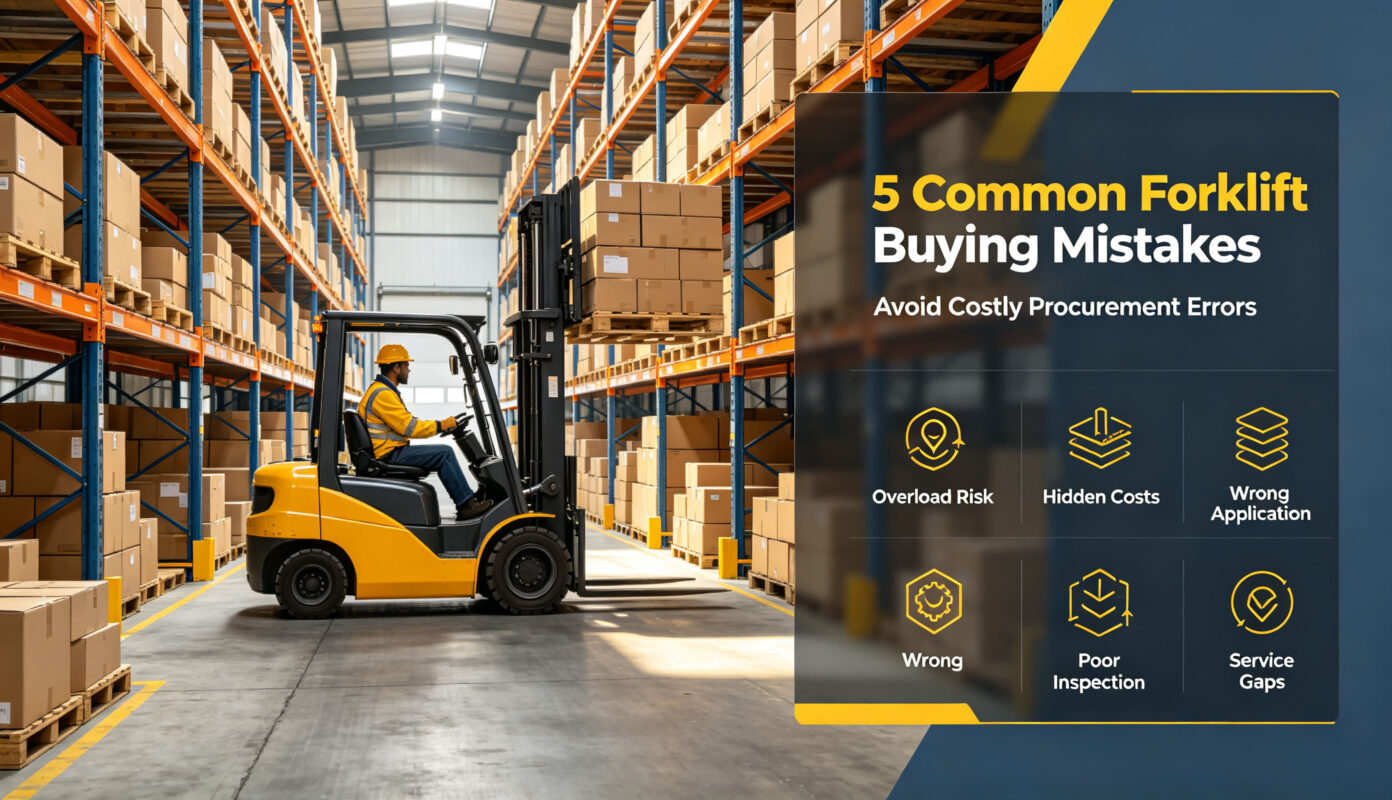
5 Critical Forklift Buying Errors to Avoid — Save Cost, Improve Efficiency and Maximize Equipment Lifespan for Your Warehouse Operations
Purchasing a forklift is a major investment for warehouses, manufacturing plants, logistics companies, and construction operations. The right forklift boosts workflow efficiency, improves workplace safety, and lowers long-term operational costs. However, many business owners and procurement teams make avoidable buying mistakes that lead to reduced productivity, frequent breakdowns, high maintenance fees, and unnecessary downtime.
Whether you are buying a new electric forklift, diesel forklift, or used material handling equipment for short-term or long-term use, avoiding these five common forklift buying mistakes will help you select the most cost-effective, suitable, and reliable machine for your specific operation.
1. Choosing Forklifts Based Only on Rated Load Capacity
The biggest and most frequent mistake forklift buyers make is selecting a model solely by its maximum load capacity. Many buyers assume a 3-ton forklift can safely handle all 3-ton loads under any working condition, which is incorrect.
A forklift’s actual working capacity is affected by multiple key factors, including load center distance, maximum lifting height, mast type, attachment weight, and irregular cargo shapes. When lifting goods to high heights or using additional attachments, the residual load capacity of the forklift will decrease significantly. Choosing an undersized model forces the machine to run under continuous overload, accelerating wear on hydraulic systems, motors, tires, and batteries, and greatly shortening equipment service life.
Conversely, buying an oversized forklift for light daily tasks leads to higher fuel consumption, slower maneuverability, increased floor damage, and unnecessary purchase costs. Always confirm your actual 90th-percentile working load and working height requirements instead of relying on theoretical maximum load data.
2. Focusing Only on Purchase Price While Ignoring Total Cost of Ownership
Most first-time buyers prioritize upfront purchase price and tend to choose low-cost forklift models, ignoring the total cost of ownership (TCO) in the long run. Cheap forklifts often adopt inferior components, unoptimized hydraulic systems, and outdated power structures, resulting in frequent failures, high replacement part costs, and excessive energy consumption.
Premium-quality forklifts have a slightly higher initial investment but feature stable performance, low failure rates, energy-saving designs, and standardized after-sales support. They effectively reduce maintenance costs, downtime losses, and energy waste throughout the service cycle. For long-term warehouse and industrial operation, a cost-effective forklift with low comprehensive consumption is far more valuable than a low-price, high-maintenance machine.
3. Neglecting On-Site Working Environment Matching
A forklift model with perfect parameters may become inefficient or even unsafe if it does not match your on-site working conditions. Many buyers ignore core environmental factors including aisle width, floor condition, indoor or outdoor operation, lifting height requirements, and working frequency.
For example, large counterbalance diesel forklifts are not suitable for narrow-aisle indoor warehouses, as they cannot flexibly turn and will cause space waste. Electric forklifts with solid tires are ideal for flat indoor floors but fail to adapt to rough outdoor construction sites. In addition, high-bay warehouses require high-mast forklifts with stable lifting performance, while frequent short-distance handling suits compact and flexible electric walkie forklifts.
Matching the forklift type, tire configuration, power mode, and mast specification to your actual working environment is the key to ensuring stable and efficient operation.
4. Purchasing Refurbished or Used Forklifts Without Detailed Inspection
Used and refurbished forklifts are popular choices for small businesses and short-term projects due to their low prices. However, judging a second-hand forklift only by its appearance and fresh paint is a typical buying pitfall. A new coat of paint can easily cover up internal wear, hydraulic leakage, mast deformation, and aging engine parts.
Many unstandardized refurbished machines only undergo simple cleaning and repainting without replacing worn pins, bushings, aging seals, or damaged hydraulic cylinders. Buyers must verify the real operating hours, complete service history, core component maintenance records, and hydraulic system operating status before purchasing used forklifts. Avoid buying “cosmetically new but internally worn” equipment that leads to frequent malfunctions after short-term use.
5. Ignoring After-Sales Service and Spare Parts Support
Many buyers only focus on equipment parameters and price while ignoring the supplier’s after-sales capability, which is one of the most critical factors for long-term forklift operation. Forklifts belong to industrial equipment that requires regular maintenance and occasional part replacement. If the supplier lacks professional after-sales teams, sufficient spare parts inventory, and local service support, minor failures will lead to long-term production downtime.
Professional forklift suppliers provide standardized maintenance guides, fast spare parts supply, and timely on-site repair services, minimizing operational losses caused by equipment failures. When selecting a forklift, always evaluate the brand’s after-sales reputation, local service coverage, and spare parts availability, rather than only comparing product prices.
Final Thoughts
Buying a suitable forklift is not about choosing the cheapest or the most powerful model, but selecting the most matched equipment for your load demands, working environment, and long-term operation plans. By avoiding these five common forklift buying mistakes, businesses can effectively reduce operational costs, improve handling efficiency, and extend equipment service life.
If you need professional forklift selection consultation, customized material handling solutions, or high-quality new/used forklift procurement services, feel free to contact our team for detailed support.
FAQs About Forklift Buying
Q1: What is the most important factor when buying a forklift?
A1: The matching degree between the forklift’s actual residual capacity, parameter configuration and your on-site working conditions, not the rated load capacity or price.
Q2: Are used forklifts worth buying?
A2: Yes, for short-term and low-frequency use, but you must inspect core components, service history and avoid poorly refurbished equipment.
Q3: How to reduce forklift long-term operating costs?
A3: Choose environment-matched models, prioritize equipment with low failure rates, and cooperate with suppliers with complete after-sales service systems.