
News
How to Select & Purchase Suitable Warehouse
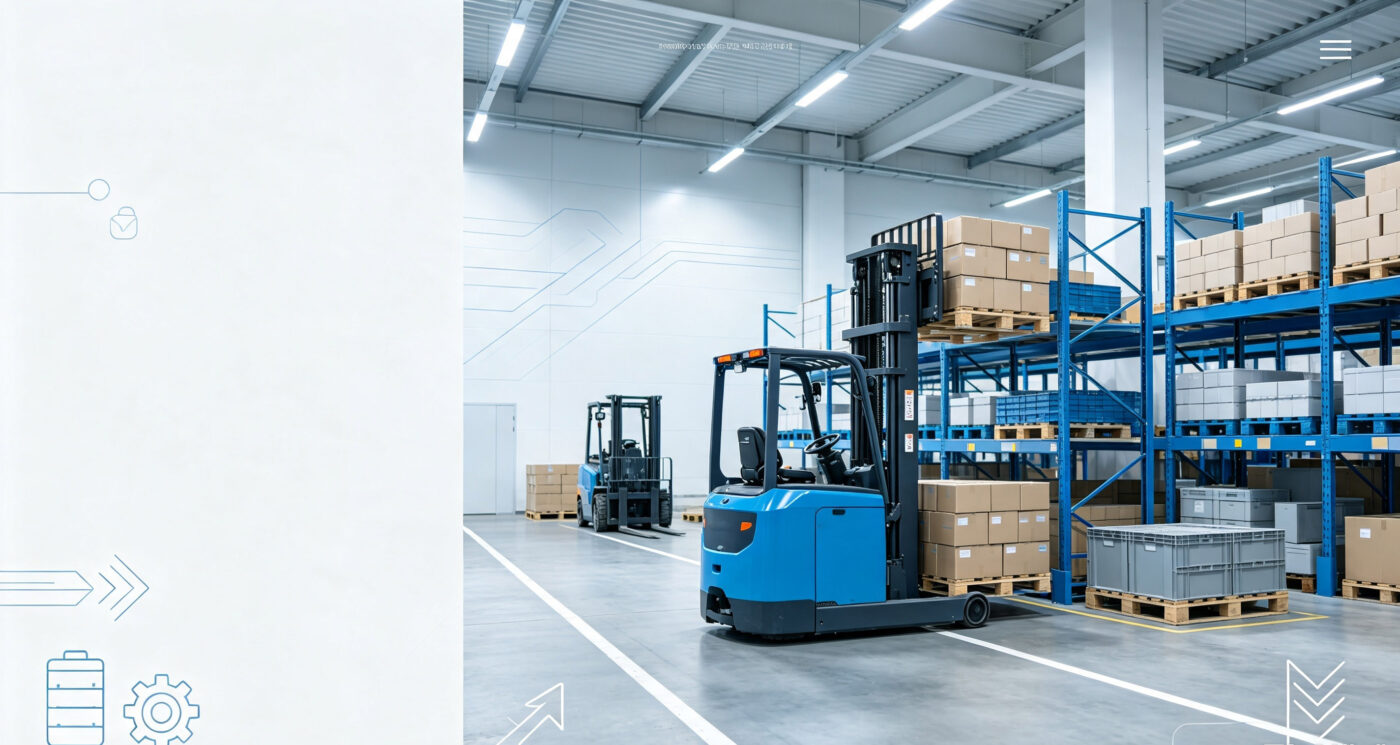
Handling Equipment – Complete Buyer’s Guide
Introduction
Warehouse material handling equipment is the core foundation of efficient storage, cargo stacking and logistics turnover. Improper selection will lead to narrow aisle congestion, low work efficiency, excessive labor cost, safety hazards and unnecessary capital waste. As a professional manufacturer and exporter of forklifts, electric stackers, loaders and supporting industrial accessories, Henan Waixing summarizes a systematic screening and purchasing guide to help global buyers pick the most cost-effective warehouse equipment matching their actual operation demands.
Step 1: Clarify Core Warehouse Operation Parameters First
Before contacting suppliers, sort out your basic warehouse data, which determines the basic model of equipment:
- Load Weight Requirement Calculate the maximum single pallet weight of your daily goods, including packaging weight. Reserve a 20% load margin to avoid long-term overload damage to the machine. Common electric stacker loads cover 1t, 1.5t, 2t and 2.5t; heavy stacking scenarios need counterbalance electric forklifts above 3 tons.
- Maximum Lifting Height Measure the highest rack layer height in your warehouse. The actual lifting height of the equipment should be 300–500mm higher than the rack top for convenient pallet placement. Single-stage, two-stage and triple-stage masts can be selected for different height demands from 1.6m to 6m.
- Aisle Width & Site Ground Condition
- Narrow aisle warehouses (width below 1.8m): Choose walk-behind full electric stackers with small turning radius;
- Standard wide warehouses: Stand-on stackers or electric forklifts are available for higher working efficiency;
- Ground inspection: Flat epoxy floor matches PU silent wheels; rough cement or outdoor ground needs wear-resistant rubber wheels.
- Daily Working Hours & Working Environment
- Short-time intermittent work (4–6 hours per day): Cost-effective lead-acid battery equipment;
- All-day continuous shift work (8–12 hours): Lithium battery stackers with quick charge function;
- Special scenarios: Cold storage, food, pharmaceutical warehouses must adopt zero-emission full-electric equipment without exhaust pollution; dusty workshops need dustproof hydraulic and control systems.
Step 2: Distinguish Equipment Types According to Working Scenarios
Classify warehouse equipment by usage to avoid blind purchase:
- Light short-distance transport & low stacking: Semi-electric stacker / manual pallet truck Suitable for small retail back warehouses, small processing workshops with low daily cargo volume, low budget demand.
- High rack intensive storage, frequent stacking: Full electric walkie stacker / stand-on stacker The most mainstream choice for medium and large logistics warehouses, compact structure, high space utilization.
- Heavy goods loading & outdoor handling: Electric counterbalance forklift / diesel forklift For heavy pallet cargo, container loading and unloading, outdoor yard operation.
- Supporting auxiliary equipment: Loading ramps, drum clamps, adjustable forks, spare batteries, safety guardrails Custom attachments can expand machine functions and reduce additional procurement costs.
Step 3: Key Technical & Safety Standards Screening
When comparing multiple suppliers, focus on these core configurations to judge product quality:
- Power & Hydraulic System Brushless drive motors are preferred over brushed motors for lower noise, less failure and longer service life; thickened integrated hydraulic cylinders with anti-leakage seals ensure stable lifting without shaking.
- Safety Protection Configuration Qualified warehouse equipment must equip emergency stop button, overload lifting protection, anti-slip braking, low battery locking function, transparent mast baffle and horn. CE certification is mandatory for European and American market export.
- Chassis & Material Thickness High-strength Q235 thick steel chassis and forks effectively prevent bending and deformation under long-term full load. Inferior thin steel machines will have hidden safety risks after 3–6 months of use.
- Battery Quality & After-sales Service Confirm battery cycle life, charging time and warranty period. Professional suppliers provide long-term spare parts supply and remote video maintenance guidance.
Step 4: Supplier Selection & Purchasing Cost Budget Tips
- Prioritize factory direct suppliers instead of middlemen Manufacturers like Henan Waixing have independent production lines, support model customization, offer competitive ex-factory prices and complete export documents (CE, invoice, packing list).
- Calculate total cost instead of only unit price Don’t judge quality solely by low price. Consider long-term costs: power consumption, battery replacement cycle, maintenance fees and spare parts price. Full-electric equipment saves far more fuel and labor costs than diesel models in long-term use.
- Confirm after-sales policy before placing orders Clarify the warranty period of core components (motor, hydraulic pump, battery), delivery cycle, shipping scheme and overseas spare parts supply channel to avoid equipment downtime affecting warehouse operation.
Step 5: Customization & Trial Run Suggestion
If your warehouse has special demands (ultra-narrow aisle, ultra-high lifting, cold storage anti-freezing), communicate customization requirements with suppliers in advance: adjustable fork width, lengthened forks, cold-resistant lithium batteries, foldable safety guardrails, etc.
For bulk orders, you can ask suppliers to provide machine operation videos or arrange sample testing to verify lifting stability, walking flexibility and noise performance.
Final Conclusion
Scientific screening of warehouse handling equipment can double warehouse storage capacity, cut labor costs by 30%–50% and eliminate operation safety risks. Define your warehouse parameters first, match the correct equipment model, screen reliable certified manufacturers and compare comprehensive cost performance, which is the complete logic of purchasing suitable warehouse machinery.